Automatic External Defibrillator About
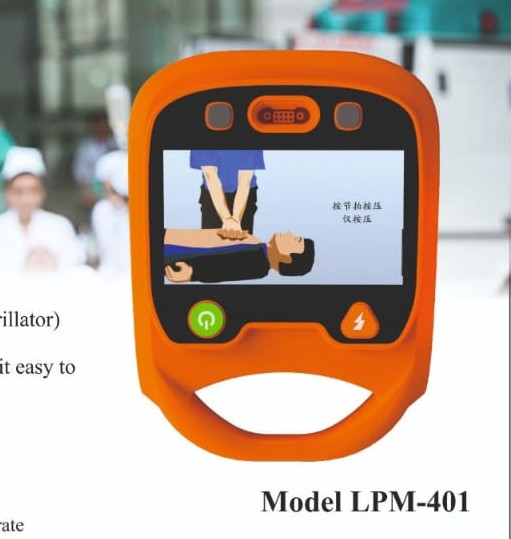
The LifePlus LPM-401 is an Automated External Defibrillator (AED) designed for rapid cardiac response in emergency situations. It is designed for use on adult, pediatric, and neonatal patients in various environments, including hospitals, ICUs, and public spaces.
Key Features of the LifePlus LPM-401:
- 7" Color Touch TFT Screen: Displays high-resolution, step-by-step guidance for the defibrillation process.
- Fully Automated Operation: Analyzes the patient's heart rhythm (via ECG) and delivers a shock automatically if needed, with minimal intervention from the user.
- Intelligent Voice Prompts: Guides rescuers through the process with step-by-step instructions.
- Portable and Lightweight: Suitable for ambulances and emergency response teams.
- CPR Guidance: Provides real-time support during resuscitation.
- Safety Features: Includes automatic self-tests to ensure readiness and a bi-phasic current-limited waveform.
Rapid and Automated Emergency ResponseThe AED delivers prompt, automated defibrillation for sudden cardiac arrest, using easy-to-apply disposable pads and precise shock energy levels. With automatic rhythm analysis and real-time voice guidance, even non-medical users can confidently assist during an emergency. The device rapidly charges and analyzes, allowing swift action when every second counts.
Durable, Portable, and User-Friendly DesignConstructed from robust ABS plastic with a shock-resistant case, this AED is lightweight and portable. Its yellow and black color coding enhances visibility in public and clinical environments. Designed for high usability, the AED features an LCD display for clear operational guidance and ECG monitoring, supporting users throughout the rescue process.
Reliable Data Storage and Safety StandardsEvent documentation stores up to 100 episodes internally, aiding medical teams in post-event analysis. The AED's daily, weekly, and monthly self-tests ensure operational readiness. It meets strict CE and ISO13485 standards, offering water and dust resistance (IP55) and functioning reliably within a wide temperature and humidity range.
FAQ's of Automatic External Defibrillator:
Q: How does the AED guide users during a cardiac emergency?
A: The AED provides clear, step-by-step voice prompts in multiple languages and displays operation instructions on its LCD screen. Automatic rhythm analysis and real-time audio guidance enable both trained and untrained individuals to use the device swiftly and correctly.
Q: What shock energy levels are available and why are they important?
A: The device offers selectable shock energy levels of 150 Joules and 200 Joules. Adjustable energy levels allow medical personnel or rescuers to tailor treatment to patient needs, increasing the effectiveness of defibrillation across a variety of scenarios.
Q: When should the AED's disposable electrodes be replaced?
A: The disposable, self-adhesive adult pads should be replaced after each use or if they become expired or damaged. Always ensure a fresh set is available with the AED to maintain readiness for emergencies.
Q: Where can this AED be deployed for use?
A: Designed for versatility, the AED is suitable for hospitals, clinics, ambulances, and public areas such as airports, schools, or offices. Its compact, lightweight design and durable construction make it ideal for a wide range of emergency response settings.
Q: What is the process of performing a defibrillation with this AED?
A: To use the AED, attach the disposable adult pads to the patient as shown on the pads, follow the audio prompts for analysis, and allow the device to deliver the shock automatically if required. The AED analyzes the rhythm and delivers the appropriate energy level quickly and safely.
Q: How does the device ensure operational reliability?
A: The AED conducts daily, weekly, and monthly automatic self-tests, checking battery life, pad connection, and internal circuitry. Its 5-year standby battery ensures long-term readiness, while event data storage provides valuable information for post-incident evaluation.
Q: What are the benefits of the AED's IP55 rating and robust material?
A: With an IP55 rating, the AED resists water and dust, enhancing its durability in challenging environments. The ABS plastic casing is both shock-resistant and lightweight, protecting the device and ensuring reliable performance during urgent situations.




 Send Inquiry

 Send Inquiry
 Send Inquiry
 Send SMS