Fetal Monitor About
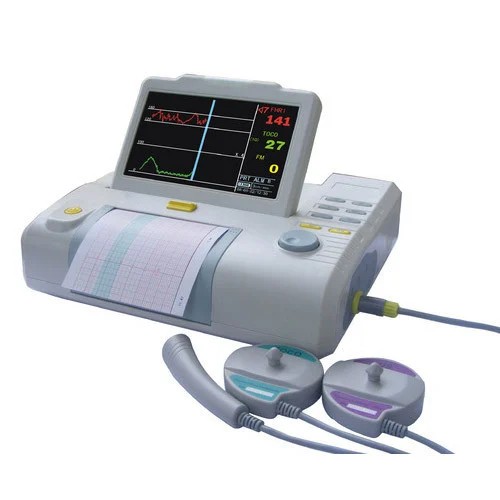
The Life Plus Fetal Monitor (LPM-703) is a portable, high-precision medical device used for antenatal and intrapartum monitoring of fetal heart rate (FHR) and uterine contractions (TOCO). It is designed for use in hospitals and clinics, featuring a built-in printer and battery backup for continuous operation.
Key Features and SpecificationsThe Life Plus LPM-703 offers a range of features for comprehensive fetal assessment:
- Display: It features a 7-inch color TFT screen for clear visualization of FHR and TOCO waveforms and numeric displays.
- Monitoring: The device supports continuous monitoring of single or twin fetal heart rates (Dual FHR) and uterine contraction pressure.
- Probes: It utilizes high-sensitivity ultrasound FHR probes (2.0 MHz working frequency) and wide-scope pressure transducers for accurate readings.
- Fetal Movement Marker: Includes an automatic and manual fetal movement detection and marking system, with a unique wireless remote for patient use.
- Printer: A built-in high-resolution thermal array printer provides instant, detailed reports with easy paper loading.
- Alarms: Equipped with audible and visual alarms for abnormal FHR conditions like tachycardia.
- Portability: It has a compact and lightweight design (approx. 2.8 kg) and a reliable built-in Li-ion battery, ensuring portability and around 3.5-5 hours of continuous backup power.
- Connectivity: Supports RS485 or TCP/IP networks for integration with central monitoring systems
Real-Time Monitoring for Better OutcomesWith its non-invasive technology, this fetal monitor provides continuous, real-time assessment of fetal heart rate and uterine contractions. The 8.4-inch TFT color LCD delivers clear, digital visuals, helping healthcare professionals quickly identify abnormal patterns and ensure timely interventions.
Reliable Data and Effortless PrintingEquipped with a built-in thermal printer, the device records and prints essential fetal and maternal parameters on 112 mm paper. Adjustable recording speeds (1, 2, or 3 cm/min) allow practitioners to tailor documentation to clinical needs, supporting detailed and accurate patient records.
Robust Features for Clinical VersatilityFeaturing USB and RS232 interfaces, data can be seamlessly transferred or archived for up to 24 hours, while the lightweight, robust design and 4-hour battery backup make it dependable for busy healthcare environments. Its user-friendly operation and intuitive alarms improve workflow efficiency and patient safety.
FAQ's of Fetal Monitor:
Q: How does the fetal monitor detect and track the fetal heart rate?
A: The fetal monitor uses a waterproof 1.0 MHz ultrasonic probe to non-invasively detect and display fetal heart rates ranging from 50 to 210 bpm. It provides real-time monitoring and audio-visual alarms alert clinicians to any abnormal readings.
Q: What process should clinicians follow to use the built-in thermal printer?
A: Clinicians can initiate printing directly from the device interface. The monitor records and prints data on 112 mm wide paper at selectable speeds (1, 2, or 3 cm/min), allowing for tailored documentation based on the patient's monitoring needs.
Q: When is this fetal monitor most beneficial during obstetric care?
A: This fetal monitor is particularly valuable during labor and late-stage pregnancy, as it continuously tracks fetal heart rate, uterine contractions, and maternal pulse, assisting healthcare providers in promptly detecting distress or complications.
Q: Where can this fetal monitor be used, and how portable is it?
A: Designed for flexibility, the monitor is suitable for hospitals, clinics, and nursing homes. Its portable 3.5 kg build and 4-hour battery backup facilitate use in various medical settings, including patient transport and contingency scenarios.
Q: What are the main benefits of the adjustable recording speed feature?
A: The adjustable recording speeds (1, 2, or 3 cm/min) enable healthcare staff to customize data recording for greater detail or longer observation periods, thereby enhancing the clarity and utility of the printed monitoring results.
Q: How is data managed and stored on the device?
A: The fetal monitor is equipped with USB and RS232 ports for easy data transfer, and it can securely store monitoring information for up to 24 hours, ensuring critical patient history is preserved for further analysis.




 Send Inquiry

 Send Inquiry
 Send Inquiry
 Send SMS