ESR Analyzer About
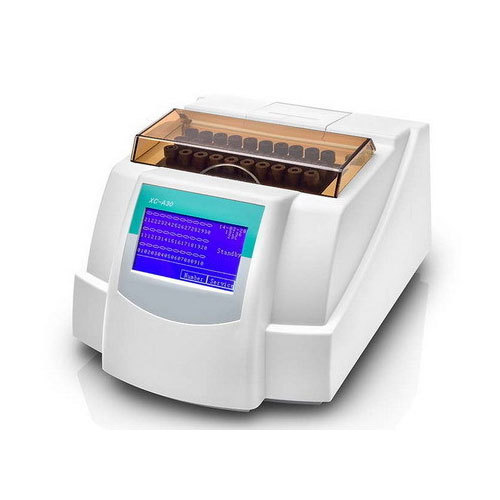
The Caretium XC-A30 is a 30-channel automated, random-access Erythrocyte Sedimentation Rate (ESR) analyzer, designed to process up to 60 samples per hour. It uses infrared photometry to measure the Westergren method in 30 minutes, featuring a touch screen, built-in printer, and temperature compensation. It is a reliable, compact (11 kg) device for clinical laboratories
Key Specifications and Features:
- Throughput: Up to 60 samples/hour.
- Capacity: 30 samples simultaneously.
- Methodology: Infrared sensor with 0.2 mm reading resolution.
- Measurement Time: 30 minutes.
- Temperature Compensation: Automatic, referenced to 18C.
- Results: Displays and prints ESR curves.
- Interface: RS-232 serial port.
- Weight: 11 kg
High Sample Capacity and SpeedWith the ability to process 40 ESR tubes at once, this analyzer significantly improves laboratory productivity. Its rapid 30-minute reading time ensures timely test results, essential for busy clinical environments. The combination of high throughput and fast analysis makes this device an asset for hematology departments.
User-Friendly Operation and Data ManagementDesigned with a digital LED display and programmable controls, the analyzer is simple to operate. Data is easily exported via the RS232 interface, and the included data management software enables efficient record-keeping. Its audio-visual alarm and intuitive menu system further streamline the workflow for laboratory staff.
Safety and DurabilitySafety features such as overheating protection, chemical-resistant materials, and a sturdy ABS plastic body ensure long-lasting operation. The transportation lock guarantees secure movement between locations, while the analyzer's low power consumption contributes to operational cost savings.
Accurate and Reliable TestingAutomatic temperature compensation and options for both manual and automatic calibration provide precise results within the broad ESR range of 0-140 mm/hr. The microprocessor-controlled system guarantees reliable and consistent measurements, meeting the rigorous demands of clinical hematology testing.
FAQ's of ESR Analyzer:
Q: How does the ESR analyzer improve efficiency in clinical laboratories?
A: The analyzer can process 40 samples simultaneously and delivers readings in just 30 minutes. Its automatic measurement and reading capabilities reduce manual effort and quicken test turnaround times, which is especially beneficial for busy labs.
Q: What types of tubes are compatible with this ESR analyzer?
A: The analyzer is compatible with Westergren method tubes, ensuring compliance with standard blood ESR analysis protocols.
Q: When should manual calibration be used instead of automatic calibration?
A: Manual calibration may be preferred during initial setup, after maintenance, or whenever the operator wants to verify accuracy independently. Otherwise, the built-in automatic calibration can be used for routine daily operations.
Q: Where should the analyzer be installed for optimal performance?
A: The analyzer is intended for use in indoor clinical laboratory settings with controlled temperature (15C to 35C) and humidity (10% to 80% RH) to ensure accurate and safe operation.
Q: What safety features are included in the ESR analyzer?
A: Key safety features include overheating protection, a chemical-resistant removable sample holder, and a transportation lock for secure movement. The unit is constructed from durable ABS plastic and is designed for single-phase electric use with low power consumption.
Q: How is data from the ESR analyzer managed and exported?
A: Test data is digitally displayed and can be exported through the RS232 interface for seamless integration with laboratory information systems. Additionally, compatible data management software is included for comprehensive data handling and reporting.
Q: What are the key benefits of using this ESR analyzer for hematology testing?
A: The analyzer offers rapid, precise, and consistent ESR measurements, automatic functioning, easy data management, robust safety features, and high sample capacity, making it ideal for clinical settings focused on efficiency and accuracy.




 Send Inquiry

 Send Inquiry
 Send Inquiry
 Send SMS